PIXELHUE
VPU Feature
VPU Feature
1.What is VPU layer resource reallocation
VPU (Layer Resource Reallocation Across Motherboards) refers to the cross-board sharing of 4K Mix layer resources among multiple output cards. It allows different output cards to share the 4K Mix layer resources they have. Once a reallocating relationship is established, the resource consumer card can utilize layer resources from the resource provider card, thereby increasing the number of available layers on the local output card and enabling more complex editing and display scenarios.
2. Why is this feature important
Large live productions frequently require a significant number of layers for IMAG, PIP, captions, animated backgrounds, and keying applications. As layer demand grows, the available 4K Mix resources on a single output card can quickly become a limiting factor.
Without flexible resource sharing, operators often have to:
● Split a screen across multiple output cards
● Reconfigure the system architecture
● Restrict layouts to remain within a single card
As a result, system design becomes more complex, deployment takes longer, and creative flexibility is reduced.
3. Application Scenario
1.In many live event and broadcast applications, the overall screen count may be limited, while a single primary display is required to accommodate a high density of visual elements simultaneously. Typical workloads include multiple PIP windows, camera returns, lowerthirds, logos, background content, and Key/Fill graphics.
As the number of active layers increases, the layer-processing capacity of a single output card can become a limiting factor, preventing the system from meeting the required composition and layout requirements.
Consequently, the available layer resources on a single output card may be insufficient to accommodate the required screen composition.
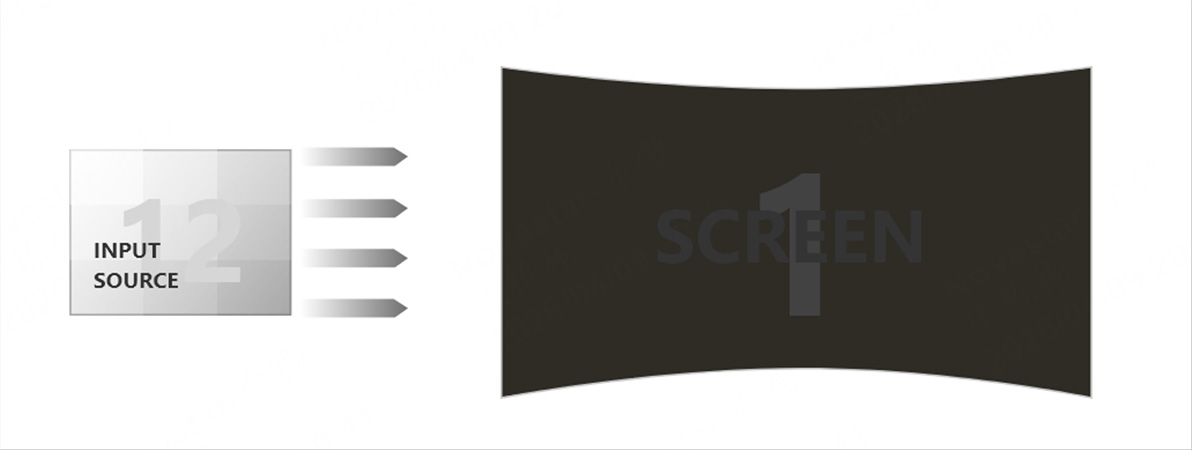
Figure 1: a single-screen scenario where 12 layers cannot be supported
2.To obtain additional layer resources, operators are often required to redesign the system architecture by splitting screens, modifying the output topology, reconfiguring card-slot assignments, and redistributing layer layouts across multiple outputs.
These workarounds not only increase overall system complexity and deployment effort, but also force creative screen design and content composition to be constrained by hardware resource limitations rather than production requirements.
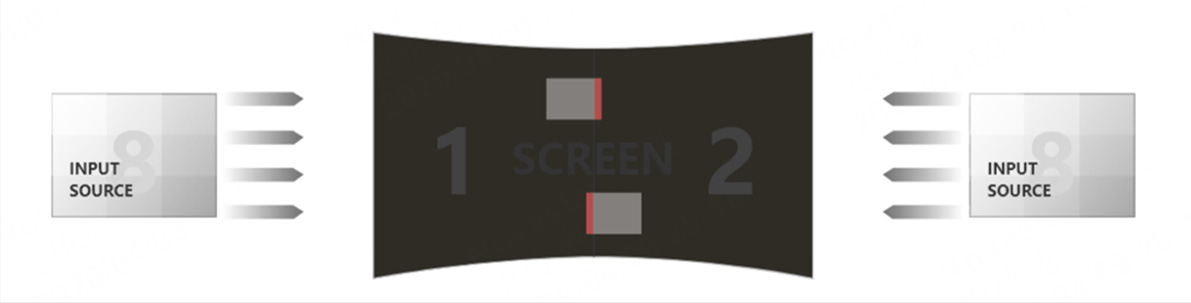
Figure 2: multi-card, multi-screen scenario where cross-board layer resource limits are exceeded
4.PIXELHUE VPU Application
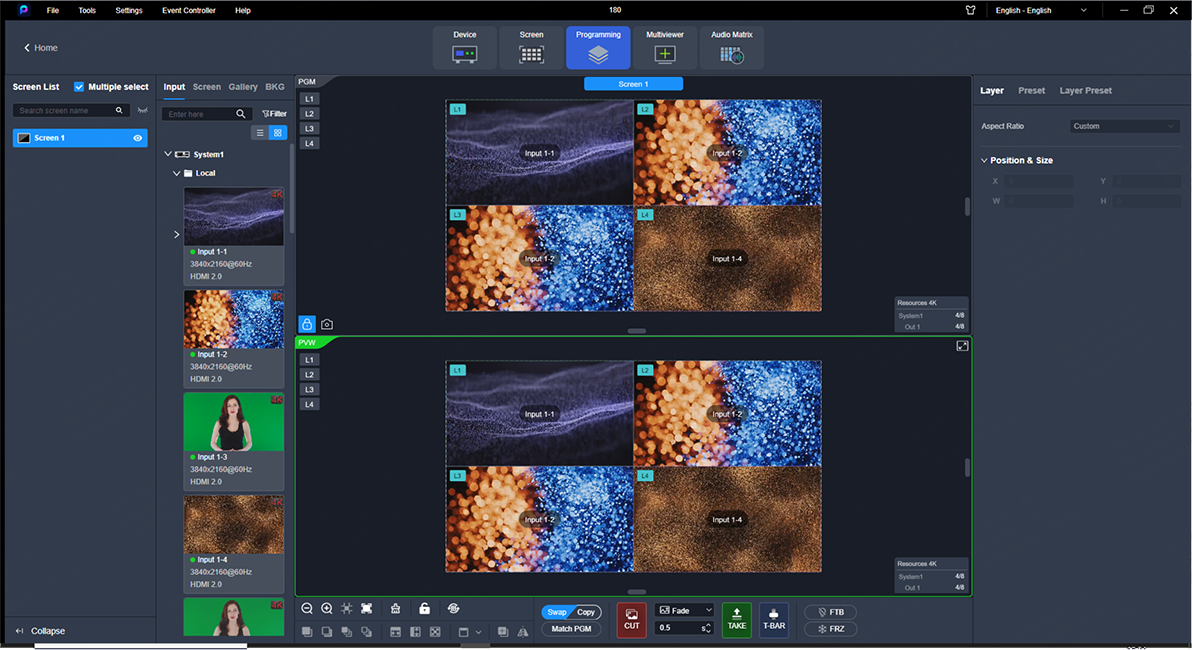
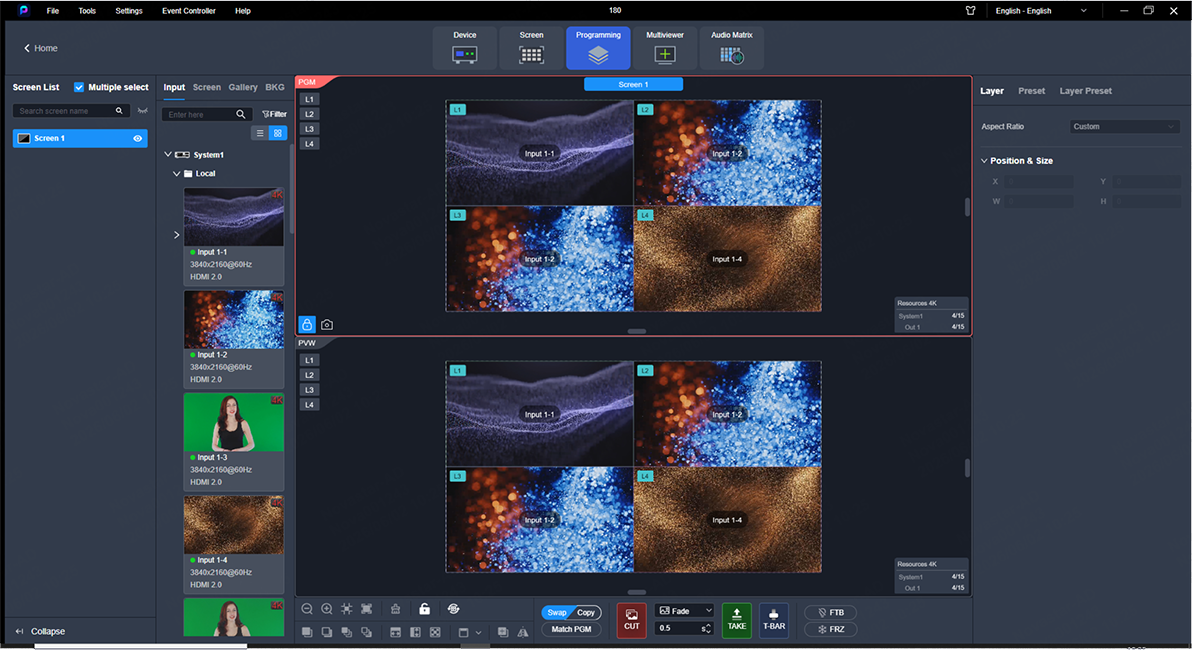
PIXELHUE supports configuring VPU resource reallocation between adjacent output cards. Once configured, the resources of a single output card can be expanded from the original 8 4K Mix layers to 15 4K Mix layers. In this mode, the output card of the lending slot is disabled. Since layer resources are located on the resource card, resource sharing can be achieved through a standalone resource card even when no output card is installed.
Note: To support certain advanced features—such as KeyFrame and Cut & Fill, which rely on layer resources—one layer resource must be reserved as a transition buffer for resource reallocation. This ensures full support for all layer-based functions after resource sharing is enabled.
5. Configure Layer Resource Reallocation
Software Interface
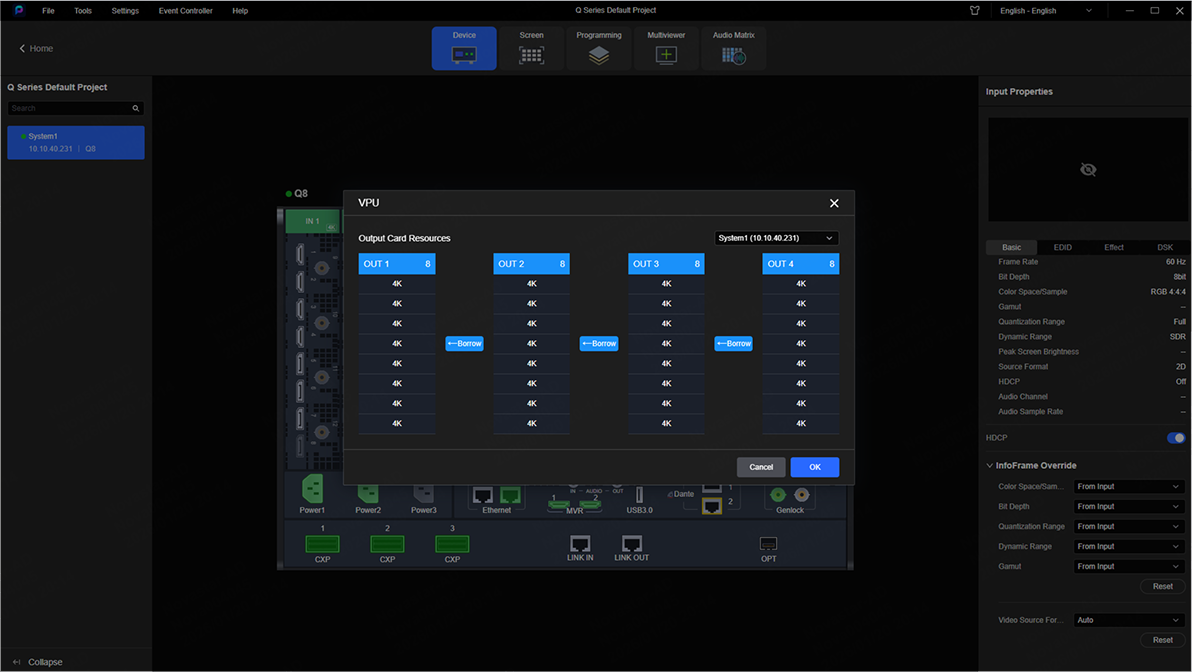
VPU feature is shown as follows:
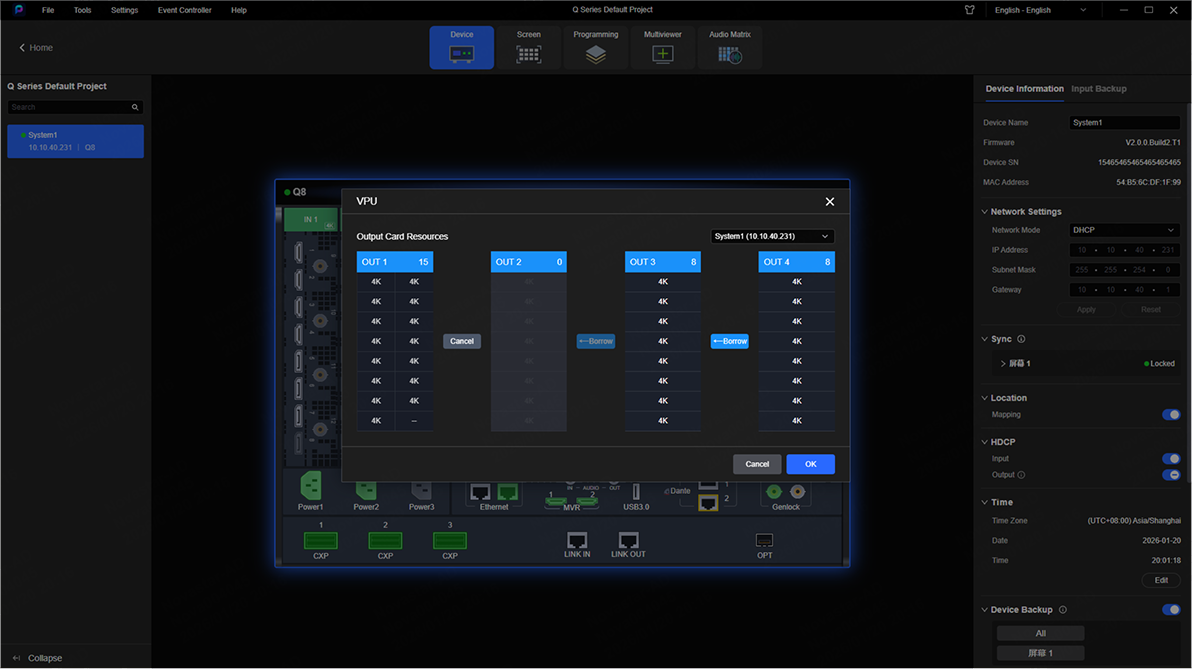
While enabling VPU features, Layer resource changes shown as follows: